Buy Sunflower Oil in Åland Island: A Complete Buyer’s Guide
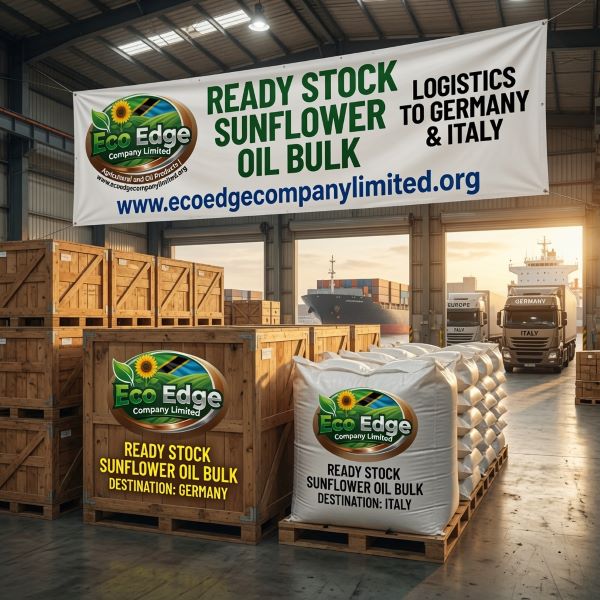
Buy Sunflower Oil in Åland Island. Sunflower oil is available for purchase in Åland Island. Quality assured by Eco Edge Company, Tanzania.
Sourcing dependable, high-quality sunflower oil in the Åland Islands means balancing Nordic food-safety expectations with the practical realities of importing a bulk commodity to an autonomous, Swedish-speaking archipelago in the Baltic Sea. Whether you run a bakery in Mariehamn, manage procurement for a hotel kitchen, or simply want a healthier oil for your home stove, this guide walks through everything you need to know before you buy sunflower oil in Åland Island — from grades and specifications to shipping logistics and supplier vetting.
Eco Edge Company Limited, an agricultural export house based in Tanzania, supplies refined and crude sunflower oil to importers, food processors, and hospitality buyers across Europe, including buyers serving the Åland market. This article is built as a practical reference — not a sales pitch — so you can make an informed purchasing decision.
Quick Answer: Refined sunflower oil suitable for the Åland Islands market is typically sold in bulk (flexitanks, ISO tanks, or drums) or in retail-ready pouches/bottles, shipped via mainland Finnish or Baltic ports and forwarded by ferry or short-sea shipping to Mariehamn. Buyers should verify oleic acid content, smoke point, EU food-contact compliance, and Codex Alimentarius conformity before ordering.
Buy Sunflower Oil in Åland Island. Sunflower oil is available for purchase in Åland Island. Quality assured by Eco Edge Company, Tanzania.
Key Takeaways
Refined sunflower oil has a smoke point around 225–232°C, making it suitable for frying, roasting, and baking in commercial kitchens.
Åland-bound shipments typically transit through Finnish mainland ports (Helsinki, Turku) or Baltic hubs before a short ferry leg to Mariehamn.
Bulk buyers should request a Certificate of Analysis (CoA), phytosanitary certificate, and Certificate of Origin before payment.
High-oleic sunflower oil is preferred by foodservice operators for its heat stability and longer fryer life.
Cold-pressed and organic-labeled sunflower oil commands a premium among Åland’s eco-conscious retail shoppers.
Always confirm Incoterms (FOB, CIF, or DDP) and minimum order quantity (MOQ) before contracting a supplier.
What Is Sunflower Oil?
Sunflower oil is a vegetable oil extracted from the seeds of the sunflower plant (Helianthus annuus). It is one of the most widely consumed cooking oils globally, prized for its light flavor, high smoke point, and favorable fatty-acid profile. Commercially, it is sold in several forms:
Type
Description
Typical Use
Refined Sunflower Oil
Neutral flavor, deodorized, long shelf life
General cooking, frying, food manufacturing
Crude Sunflower Oil
Unrefined, darker color, stronger flavor
Further refining, industrial use
Cold-Pressed / Virgin
Mechanically pressed, minimal processing
Salad dressings, finishing oil, cosmetics
High-Oleic Sunflower Oil
Higher monounsaturated fat content
Deep frying, extended fryer life, snack manufacturing
Organic Sunflower Oil
Certified pesticide-free cultivation
Premium retail, health-focused buyers
For buyers in Åland specifically, refined and high-oleic grades dominate commercial kitchen demand, while cold-pressed and organic variants are gaining traction with retail shoppers who prioritize Nordic clean-label preferences.
Why Sunflower Oil Matters for Åland Island Buyers
The Åland Islands sit at the intersection of Finnish and Swedish culinary traditions, with a food culture built around baking, fish preparation, and seasonal produce. Sunflower oil fits naturally into this landscape for several reasons:
Neutral flavor profile that doesn’t compete with delicate Nordic ingredients like herring, dill, or rye.
Heat stability, useful for frying traditional dishes and baked goods without oxidizing quickly.
Import practicality — sunflower oil is not locally produced in Åland, so all supply is imported, making sourcing reliability and consistent quality a genuine competitive concern for local buyers.
Health positioning — sunflower oil is naturally free of trans fats and contains vitamin E, aligning with the region’s health-conscious consumer base.
Benefits of Sunflower Oil
Nutritional Benefits
Rich in vitamin E (a fat-soluble antioxidant)
Low in saturated fat compared to palm or coconut oil
Naturally cholesterol-free and trans-fat-free
High-oleic variants provide a favorable monounsaturated-to-polyunsaturated fat ratio
Culinary Benefits
High smoke point suitable for frying, sautéing, and roasting
Light, neutral taste that doesn’t overpower other ingredients
Long shelf life when refined and properly stored
Consistent performance in commercial fryers, reducing oil turnover costs
Industrial and Cosmetic Benefits
Used as a carrier oil in skincare and haircare formulations for its emollient properties
A feedstock for biodiesel and bio-lubricant production in sustainability-focused industries
Byproduct sunflower meal is valuable as livestock feed, adding value across the supply chain
Key Specifications to Check Before You Buy
When you buy sunflower oil in Åland Island — whether for a restaurant, a food manufacturing line, or resale — always request a technical specification sheet. Typical parameters include:
Parameter
Typical Refined Grade
Why It Matters
Free Fatty Acid (FFA)
≤ 0.1%
Indicates oil freshness and refining quality
Moisture & Impurities
≤ 0.1%
Affects shelf life and frying performance
Peroxide Value
≤ 5 meq/kg
Measures oxidation/rancidity risk
Color (Lovibond)
2–3 Red / 20 Yellow
Visual quality benchmark
Smoke Point
225–232°C
Frying and heat-application suitability
Oleic Acid Content
20–70% (standard to high-oleic)
Determines heat stability and fryer life
Packaging
Flexitank, ISO tank, drums, bottles/pouches
Determines logistics and shelf presentation
Always ask your supplier for a Certificate of Analysis (CoA) matching these parameters for every shipment batch, not just a generic product spec sheet.
How to Buy Sunflower Oil in Åland Island
Sourcing sunflower oil for the Åland market generally follows these steps:
Define your requirement — refined, crude, high-oleic, or organic; bulk (flexitank/ISO tank) versus retail-ready packaging.
Request supplier documentation — CoA, Certificate of Origin, phytosanitary certificate, and (for organic claims) an EU-recognized organic certificate.
Confirm compliance — verify the oil meets EU food-contact and labeling regulations, since Åland operates under Finnish/EU food law despite its autonomous status.
Agree on Incoterms — FOB (you arrange shipping), CIF (supplier arranges freight and insurance to destination port), or DDP (delivered duty paid to your door).
Arrange the final-mile leg — most shipments land at a mainland Finnish port (Helsinki, Turku, or Naantali) or via Baltic transshipment, then move to Mariehamn by short-sea ferry or feeder vessel.
Inspect on arrival — conduct a quality check or third-party inspection (e.g., SGS, Bureau Veritas) before final payment release, especially on first orders.
Clear customs — coordinate with a licensed customs broker familiar with Åland’s special EU VAT and tax-border status.
Where to Buy
Buyers typically source sunflower oil in Åland through:
Direct import from origin countries such as Ukraine, Russia, Kazakhstan, or Tanzania-based exporters like Eco Edge Company Limited, who supply African-origin sunflower oil as an alternative to traditional Black Sea suppliers.
Regional distributors in mainland Finland or Sweden who hold stock and forward smaller quantities to Åland retailers and foodservice operators.
Online B2B marketplaces, useful for price discovery but requiring careful supplier vetting.
Local wholesalers and cash-and-carry outlets in Mariehamn for small-volume foodservice needs.
For businesses needing consistent bulk supply — restaurants, bakeries, or food processors — establishing a direct relationship with an exporter offering documented quality control is generally more reliable than repeated spot-market purchases.
Can I Buy in Bulk?
Yes. Bulk sunflower oil purchases for the Åland market are typically arranged in the following formats:
Format
Approximate Volume
Best Suited For
Flexitank (in 20ft container)
~20,000–24,000 liters
Importers, distributors, large processors
ISO Tank
~20,000–26,000 liters
Long-distance shipping, temperature-stable transport
Drums (200L)
Per drum, palletized
Mid-size foodservice groups, processors
IBC Totes (1,000L)
Per tote
Smaller manufacturers, catering groups
Retail Bottles/Pouches
1L–20L
Retail chains, supermarkets, direct consumer sale
Minimum order quantities (MOQs) vary by supplier, but bulk international orders commonly start at container-load quantities (a single 20ft flexitank container), while regional distributors may offer smaller pallet-level quantities for local Åland buyers.
Bulk Exports and Wholesale Supply
For B2B buyers seeking wholesale sunflower oil at scale, Eco Edge Company Limited offers export-grade refined and crude sunflower oil sourced through vetted supply chains, with documentation suited for European import requirements. Wholesale buyers — including importers, distributors, and food manufacturers — can request:
Batch-specific Certificates of Analysis
Flexible packaging options (flexitank, drums, or bottled private label)
FOB or CIF pricing quotations
Sample shipments prior to full container commitments
Sunflower Oil Price in Åland Island: What Affects Cost
Sunflower oil pricing is influenced by global commodity markets, not just local retail dynamics. Key price drivers include:
Black Sea supply conditions — Ukraine and Russia together account for a large share of global sunflower oil exports, so disruptions in that region ripple through global pricing.
Crude oil and freight costs — shipping costs to a remote archipelago like Åland add a logistics premium versus mainland European pricing.
Currency fluctuations — since Åland trades in euros but sources from non-eurozone origins, exchange-rate movements affect landed cost.
Seasonal harvest cycles — prices often ease after major harvest periods (typically Q3–Q4 in the Northern Hemisphere) and firm up ahead of planting seasons.
Grade and certification premiums — organic, cold-pressed, and high-oleic variants consistently carry a price premium over standard refined oil.
Wholesale Exporters and Supply Chain Considerations
When evaluating wholesale exporters of sunflower oil for the Åland market, buyers should assess:
Track record and export history — how long the exporter has been shipping to the EU/Nordic region.
Documentation readiness — CoA, phytosanitary certificates, and Certificates of Origin available on request, not after payment.
Packaging flexibility — ability to supply both bulk and retail-ready formats.
Communication and lead times — clear production and shipping timelines, particularly important given Åland’s reliance on connecting freight via mainland ports.
Diversified sourcing — exporters with alternative origin countries (such as African-grown sunflower oil) can offer supply resilience when traditional Black Sea sourcing faces disruption, as documented in industry reporting on regional supply chain disruptions and infrastructure incidents affecting oil terminals.
Diversifying supplier relationships — rather than relying on a single origin country — has become a standard risk-management practice for European edible oil buyers in recent years, Buy sunflower oil in Åland Island, given repeated volatility in traditional Black Sea sunflower oil supply chains.
Why Choose Eco Edge Company Limited to Buy Sunflower Oil
Eco Edge Company Limited is an agricultural export company based in Tanzania, supplying a broad portfolio of commodities — including edible oils, fertilizers, sisal fiber products, and agro products — to international B2B and B2C buyers.
Reasons buyers in the Åland Islands and across Europe consider Eco Edge Company Limited include:
Diversified, non-Black-Sea sourcing — an alternative supply origin for buyers seeking to reduce dependency risk.
Documented quality control, with specification sheets and certificates provided per batch.
Flexible order formats, from sample quantities to full container loads.
A broad commodity catalog, allowing buyers to consolidate multiple procurement needs (oils, grains, pulses, spices) with a single supplier relationship.
Direct communication channels for quotations, documentation, and logistics coordination via the company’s contact page.
Expert Insights to Buy sunflower oil in Åland Island
Insight 1 — On heat stability: High-oleic sunflower oil retains its integrity through repeated frying cycles far better than standard sunflower oil, which is why professional kitchens increasingly specify it for high-turnover fryers.
Insight 2 — On documentation: The single most common cause of delayed customs clearance for edible oil imports into EU territories, including Åland, is incomplete or mismatched certification — buyers should cross-check that the CoA batch number matches the physical shipment before accepting delivery.
Insight 3 — On sourcing resilience: Diversifying sunflower oil sourcing beyond traditional Black Sea suppliers has shifted from a niche strategy to a mainstream risk-management practice among European importers, following repeated regional supply disruptions in recent years.
Common Mistakes to Avoid When Buying Sunflower Oil
Skipping the Certificate of Analysis — relying only on a generic product brochure instead of batch-specific test results.
Ignoring Incoterms details — assuming “the price includes shipping” without confirming which Incoterm applies.
Overlooking packaging suitability — ordering flexitank quantities without confirming your storage facility can handle bulk decanting.
Choosing price over documentation — the cheapest quote is not useful if the shipment lacks proper phytosanitary or origin paperwork required for EU customs clearance.
Failing to sample first — committing to a full container order without requesting a smaller sample shipment from a new supplier.
Not verifying organic or high-oleic claims — accepting label claims without requesting the underlying certification.
Best Practices for Buyers
Always request a pre-shipment sample and independent lab test for first-time supplier relationships.
Lock in pricing with a clear validity window, since sunflower oil is a globally traded commodity subject to daily price movement.
Use a licensed customs broker experienced with Åland’s specific EU tax-border status.
Diversify supplier origin where possible to reduce exposure to regional supply shocks.
Maintain a documented quality checklist for every incoming shipment, not just the first one.
Build a relationship with your supplier’s sales contact for faster requotes during price volatility.
Frequently Asked Questions
1. What is the best type of sunflower oil for frying? High-oleic refined sunflower oil is best for frying due to its higher smoke point and greater resistance to oxidation during repeated use.
2. Is sunflower oil healthier than palm oil? Sunflower oil generally contains less saturated fat than palm oil and is a source of vitamin E, though the healthiest choice depends on the specific variant (standard versus high-oleic) and your dietary needs.
3. How is sunflower oil shipped to the Åland Islands? Most sunflower oil destined for Åland transits through a mainland Finnish or Baltic port before completing the final leg by short-sea ferry or feeder vessel to Mariehamn.
4. What documents should I request before buying sunflower oil in bulk? At minimum, request a Certificate of Analysis, Certificate of Origin, and phytosanitary certificate matching the specific shipment batch.
5. Can I buy sunflower oil in small retail quantities in Åland? Yes — local wholesalers, supermarkets, and cash-and-carry outlets in Mariehamn typically stock retail bottles and smaller packaged formats.
6. What is the shelf life of refined sunflower oil? Properly refined and stored sunflower oil typically has a shelf life of 12–24 months from production, depending on packaging and storage conditions.
7. Is organic sunflower oil worth the premium price? For buyers prioritizing pesticide-free cultivation and clean-label positioning, organic sunflower oil justifies its premium; for standard cooking applications, refined non-organic oil performs comparably.
8. How do I compare sunflower oil suppliers? Compare based on documentation transparency, packaging flexibility, sample availability, pricing terms, and track record shipping to EU/Nordic destinations — not price alone.
9. What is a flexitank, and do I need one? A flexitank is a flexible bulk liquid container fitted inside a standard shipping container, ideal for importers needing large volumes without investing in dedicated tank infrastructure; smaller buyers may prefer drums or totes instead.
10. Does Eco Edge Company Limited ship sunflower oil to the Åland Islands? Eco Edge Company Limited exports sunflower oil internationally and can coordinate shipping logistics for buyers in the Åland Islands; contact the company directly via its contact page for a current quotation and shipping plan.
11. What is the difference between crude and refined sunflower oil? Crude sunflower oil is unrefined, darker, and stronger in flavor, typically used for further processing, while refined sunflower oil is deodorized, neutral in taste, and ready for direct cooking use.
Conclusion to Buy sunflower oil in Åland Island
Buying sunflower oil in the Åland Islands comes down to three fundamentals: verifying the right grade and specification for your use case, insisting on complete and batch-matched documentation, and choosing a supplier who can reliably manage the multi-leg logistics into a remote Baltic archipelago. Whether you need a single case of retail-ready bottles or a full container of bulk refined oil, doing the diligence up front — sampling, certification checks, and clear Incoterms — will save time and cost down the line.
If you’re ready to request a quotation or sample shipment, reach out to Eco Edge Company Limited through the contact page or browse the full product catalog to compare available oil grades and packaging formats.








Add a review