

Categories

Description
Sunflower Oil for Sale in Afghanistan: A Complete Buyer’s Guide
Premium sunflower oil for sale in Afghanistan. Pure, fresh, and competitively priced from Eco Edge Company Limited, Tanzania. Order now!
Sunflower oil has become the cooking oil of choice across much of Afghanistan, favored over palm oil because it stays clear rather than clouding in cooler temperatures, and prized by households, bakeries, and street food vendors alike for its light taste and high smoke point. If you’re searching for sunflower oil for sale in Afghanistan — whether as a household buyer, restaurant owner, or wholesale importer — this guide covers what to look for, current pricing dynamics, sourcing options, and how bulk buyers can secure reliable supply.
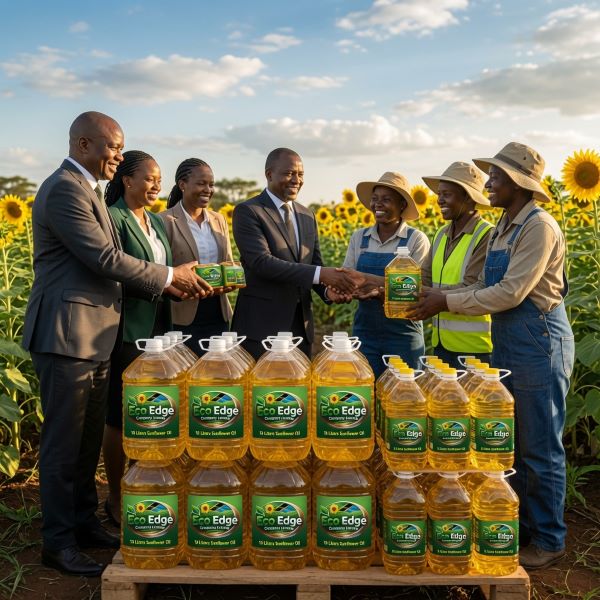
Eco Edge Company Limited, based in Tanzania, supplies refined sunflower oil for sale in Afghanistan for wholesale export, including to markets across Asia. This guide draws on that sourcing and export experience to walk through specifications, sourcing regions, and the practical buying process — not just generic product marketing.
In this guide: what sunflower oil is and how it’s made, its health and culinary benefits, key specifications for bulk buyers, Afghanistan’s import market context, how to buy retail or wholesale, and answers to the most common buyer questions.

What Is Sunflower Oil?
Sunflower oil is a vegetable oil extracted from the seeds of the sunflower plant (Helianthus annuus). It’s one of the most widely consumed cooking oils globally, valued for its light color, neutral flavor, and high smoke point, which makes it well suited to frying, roasting, sautéing, and baking.
What Is Sunflower Oil Made Of?
Refined sunflower oil is composed primarily of triglycerides — a mix of polyunsaturated (mainly linoleic acid), monounsaturated (oleic acid), and a small proportion of saturated fatty acids. High-oleic sunflower oil varieties contain a higher proportion of monounsaturated fat, giving them greater heat stability for repeated frying use, which is why food manufacturers and foodservice operators often specifically request high-oleic grades.
How Is Sunflower Oil Made?
Commercial sunflower oil production generally follows these stages:
- Seed cleaning and dehulling — removing debris and the outer hull from harvested sunflower seeds
- Crushing and pressing — mechanical pressing extracts crude oil from the seed kernels
- Solvent extraction (for higher yield) — remaining oil is extracted from the pressed seed cake
- Refining — degumming, neutralizing, bleaching, and deodorizing the crude oil to produce clear, neutral-tasting refined sunflower oil
- Filtration and packaging — the finished oil is filtered and bottled or bulk-packed for distribution
Cold-pressed sunflower oil skips the solvent extraction and high-heat refining steps, retaining more natural flavor and nutrients but yielding less oil per batch — which is why cold-pressed and organic sunflower oil typically commands a premium price over standard refined oil.
Benefits of Sunflower Oil
- Heart-conscious cooking: Sunflower oil is low in saturated fat and contains no trans fats when properly refined, making it a common choice for households managing cholesterol
- High smoke point: Suitable for deep-frying, roasting, and high-heat cooking without breaking down quickly
- Neutral flavor: Doesn’t overpower the taste of food, unlike some stronger-flavored oils
- Vitamin E content: A natural source of antioxidants, which is also why it’s used in skincare and haircare formulations
- Versatility: Works equally well for cooking, baking, salad dressings, and industrial food processing
Callout: For high-heat commercial frying — the kind restaurants and street food vendors depend on daily — high-oleic sunflower oil holds up significantly better over repeated use than standard refined oil, reducing both oil replacement frequency and cost per batch fried.
Key Specifications for Bulk and Wholesale Buyers
If you’re purchasing sunflower oil in bulk — whether for a restaurant chain, food processing plant, or import/distribution business — confirm these specifications before finalizing an order:
| Specification | Typical Standard |
|---|---|
| Free Fatty Acid (FFA) | 0.1% maximum |
| Moisture & Impurities | 0.1% maximum |
| Color (Lovibond) | Light yellow, low color units |
| Peroxide Value | 5 meq/kg maximum |
| Smoke Point | Approx. 225–230°C (refined) |
| Packaging | 1L, 5L, 20L containers, or bulk flexitank/drums |
Buyers sourcing 5 litre sunflower oil for household or small foodservice use should also check container seal integrity and production/expiry dates, since oil quality degrades with prolonged storage or heat exposure during transit.
Sunflower Oil in Afghanistan: Market Context
Afghanistan’s cooking oil market has historically relied heavily on imports from regional neighbors, particularly Russia, Kazakhstan, and Uzbekistan, given the country’s limited domestic oilseed processing capacity. Sunflower oil is generally preferred over palm oil in Afghan kitchens because it remains liquid and clear at the cooler temperatures common across much of the country, rather than clouding or solidifying.
Regional supply dynamics can shift import patterns — disruptions affecting Black Sea shipping routes, for instance, have at times pushed South and Central Asian buyers to diversify sourcing toward alternative suppliers. This is one reason diversified, non-regional suppliers — including exporters based in East Africa — have become part of the conversation for bulk buyers looking to de-risk their supply chains.
For current regional pricing benchmarks, buyers can reference resources such as Selina Wamucii’s Afghanistan sunflower oil price data and market commentary from UkrAgroConsult on how Black Sea supply disruptions are reshaping regional vegetable oil sourcing.
Who Buys Sunflower Oil in Afghanistan?
- Urban households buying retail-sized bottles (1L–5L) for daily cooking
- Restaurants and bakeries needing high-smoke-point oil for frying, roasting, and baking
- Street food vendors who need affordable oil that stays clear across seasonal temperature swings
- Food processors manufacturing packaged snacks and baked goods
- Importers and wholesale distributors supplying local bazaars and regional markets in bulk
How to Buy Sunflower Oil: Retail vs. Wholesale
For Households and Small Retailers
Retail buyers typically purchase pre-packaged 1L, 3L, or 5L bottles through local grocers, supermarkets, or bazaars. When buying retail, check the label for refining method, production date, and storage recommendations.
For Bulk and Wholesale Buyers
Wholesale and import buyers generally follow this process:
- Define order volume and packaging format (bottled, drums, flexitank, or bulk vessel)
- Request specifications and a Certificate of Analysis from the supplier
- Confirm Incoterms (FOB, CIF, CFR) and shipping route/timeline
- Arrange a sample or pre-shipment inspection, particularly for a first order
- Agree on a documented payment structure (such as a Letter of Credit) before shipment
- Finalize contract, book freight, and prepare import documentation (Bill of Lading, packing list, certificate of origin)
Where to Buy Sunflower Oil in Bulk: Why Eco Edge Company Limited
Eco Edge Company Limited exports refined sunflower oil wholesale from Tanzania, alongside crude sunflower oil and a wider range of edible oils including refined palm oil, refined soybean oil, and refined corn oil. Buyers can review the full refined sunflower oil product page, browse the complete edible oil catalog, or reach out via the contact page to request current pricing and documentation for Afghanistan-bound orders.
Buyers can also explore related sourcing guides, including sunflower oil wholesale companies, bulk refined sunflower oil for sale, and premium sunflower oil for sale for buyers comparing sourcing options across markets.
Callout: Before committing to a bulk order, request a dated quotation, confirm specifications in writing, and — for first-time orders — arrange an independent quality check. This protects both buyer and supplier and is standard practice in international edible oil trade.
Can You Buy Sunflower Oil in Bulk?
Yes. Sunflower oil is commonly sold wholesale in bulk formats including 20-liter jerry cans, 200-liter drums, flexitanks (for full container loads), and bulk vessel shipments for very large orders. Minimum order quantities vary by supplier, and many exporters can accommodate a smaller trial shipment before scaling to full container volumes — a sensible step for first-time importers verifying quality and reliability.
Common Mistakes When Buying Sunflower Oil Wholesale
- Not confirming FFA and peroxide values, which indicate oil freshness and oxidation level
- Relying on outdated pricing instead of requesting a current, dated quote
- Overlooking packaging suitability for long-distance or overland transit into landlocked markets
- Skipping a sample or pre-shipment inspection on a first-time bulk order
- Not clarifying Incoterms, leading to confusion over who covers freight and insurance
- Ignoring storage conditions during transit, which can accelerate oil degradation in hot climates
Best Practices for Buyers
- Request a Certificate of Analysis tied to the specific shipment batch
- Compare quotes against current market pricing benchmarks before committing
- Start with a trial order before scaling to full container or bulk vessel volumes
- Confirm packaging is suited to your climate and transit route
- Use documented, traceable international payment methods
Frequently Asked Questions
What is sunflower oil made of?
Sunflower oil is extracted from sunflower seeds and is composed mainly of polyunsaturated and monounsaturated fatty acids, with high-oleic varieties containing a greater proportion of monounsaturated fat for improved heat stability.
How is sunflower oil extracted from sunflower seeds?
Seeds are cleaned, dehulled, and mechanically pressed to extract crude oil, which is often followed by solvent extraction for higher yield, then refined through degumming, neutralizing, bleaching, and deodorizing to produce clear, neutral-tasting oil.
Why is sunflower oil preferred over palm oil in Afghanistan?
Sunflower oil stays clear and liquid in cooler temperatures, while palm oil tends to cloud or solidify, making sunflower oil more practical for everyday cooking across Afghanistan’s climate.
Where does Afghanistan’s sunflower oil supply typically come from?
Afghanistan has traditionally imported much of its sunflower oil from regional neighbors such as Russia, Kazakhstan, and Uzbekistan, though buyers increasingly look at diversified international suppliers to manage supply chain risk.
Can I buy 5 litre sunflower oil for household use?
Yes, 5 litre containers are a common retail and small-business format for sunflower oil, widely available through grocers and suppliers offering smaller packaged sizes alongside bulk options.
What packaging options are available for bulk sunflower oil orders?
Common bulk packaging includes 20-liter jerry cans, 200-liter drums, flexitanks for full container shipments, and bulk vessel loading for very large orders.
What is high-oleic sunflower oil and why does it matter?
High-oleic sunflower oil contains a higher proportion of monounsaturated fat, giving it greater stability at high cooking temperatures — a key reason restaurants and food manufacturers often specifically request this grade for frying.
How can I check sunflower oil quality before a bulk purchase?
Request a Certificate of Analysis showing free fatty acid content, peroxide value, and moisture/impurity levels, and consider a third-party inspection for first-time or large-volume orders. <!– /wp:paragraph –> <!– wp:heading {“level”:3} –>
Is sunflower oil used in anything besides cooking?
Yes — sunflower oil is also used in cosmetic and personal care formulations for its antioxidant and skin-hydrating properties, and increasingly as a feedstock in biofuel and bio-lubricant production.
Does Eco Edge Company Limited export sunflower oil in bulk?
Yes, Eco Edge Company Limited exports refined and crude sunflower oil wholesale from Tanzania, with bulk packaging options and export documentation available through the product catalog.
Key Takeaways
- Sunflower oil is favored in Afghanistan for staying clear in cooler temperatures, unlike palm oil
- Bulk buyers should confirm FFA, peroxide value, and packaging suitability before ordering
- Regional supply disruptions have pushed some buyers toward diversified, non-regional suppliers
- High-oleic sunflower oil offers better heat stability for commercial frying applications
- Always request a dated quote, sample, and documented payment terms for first-time bulk orders
Expert Insight
For importers serving landlocked markets like Afghanistan, packaging and transit resilience often matter as much as the oil’s initial specifications. Oil that meets spec at the point of loading can still degrade if packaging isn’t suited to long overland transport through variable temperatures. Buyers who factor transit conditions into their supplier evaluation — not just lab specs — tend to see far fewer quality complaints on arrival.
Conclusion
Whether you’re sourcing a few cartons of retail-sized bottles or arranging a full container of bulk refined sunflower oil for the Afghan market, the fundamentals stay the same: verify specifications, confirm current pricing, and structure the transaction with clear documentation. Diversifying beyond traditional regional suppliers can also help buyers manage the supply risk that periodically affects Black Sea and Central Asian sourcing routes.
Ready to source sunflower oil for your market? Visit Eco Edge Company Limited’s refined sunflower oil product page or contact our team for current pricing, specifications, and shipping options tailored to your order volume.
Location
-
Bunkyo, Tokyo, Japan





Add a review